We hear it all the time. “I’ve never held a pry bar. Two days can’t possibly be enough.” It’s a reasonable thing to think. Most trades training is months long. Most has prerequisites. Most assumes you’ve at least swung a hammer once. Ours doesn’t. And it still works. Here’s how.
Show, then guide, then let go
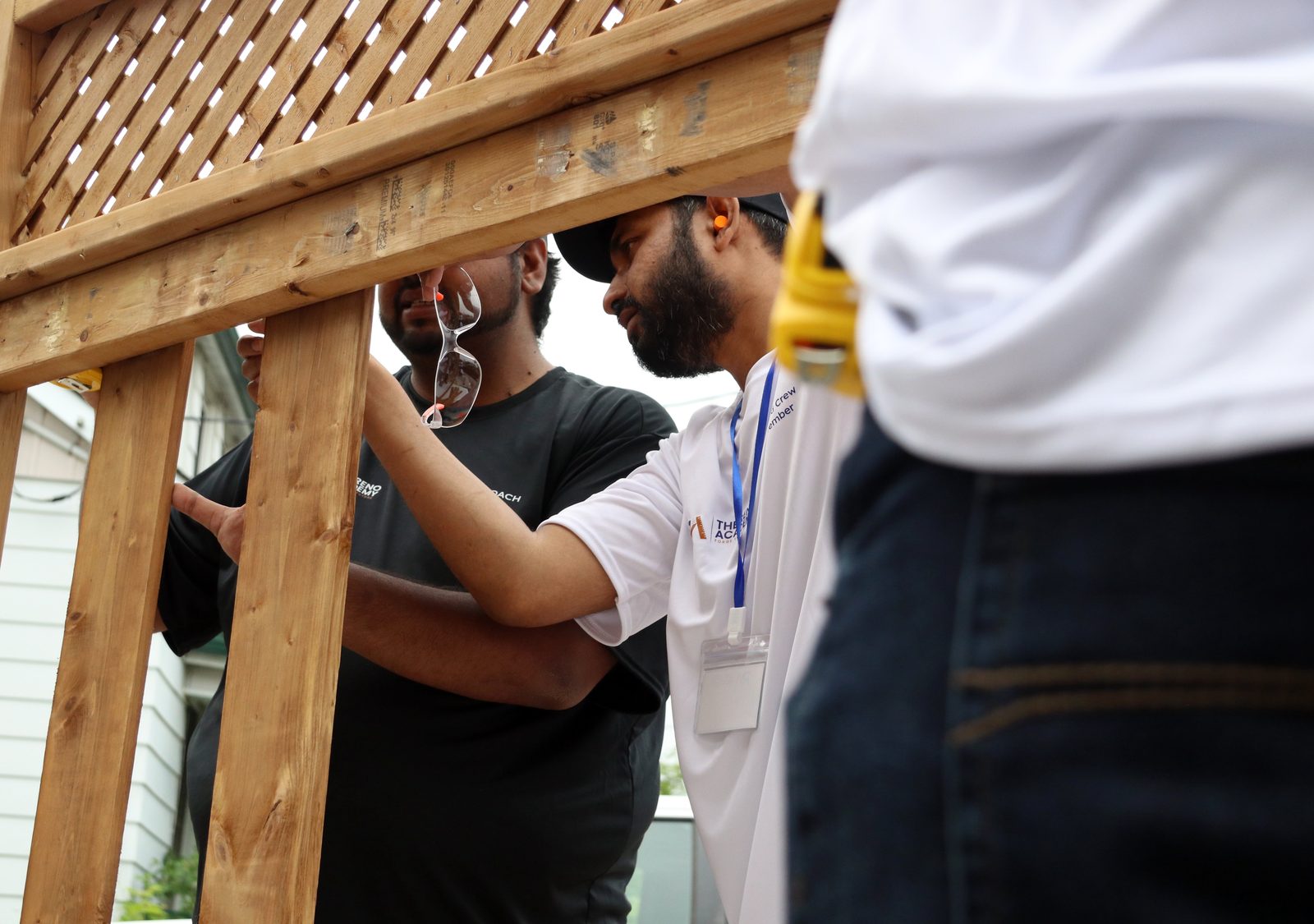
Our Coaches don’t lecture. They demonstrate. Every skill, every tool, every step is shown first, then guided, then practised solo. You watch the right way, then you try it with your Coach standing next to you correcting in real time, then you do it on your own while the Coach moves on. Three exposures. Most adults learn faster than they think when the format is right.
Seventy percent hands-on
Of the 16 contact hours, about 11 are you holding tools, doing real work on real materials. Five are conversation, orientation, and reference. Most trades programs invert that ratio. We don’t, because the skills we teach are physical, and you only build them through reps.
Small groups, individual attention
Cohorts are capped at 10 people. Your Coach knows your name, knows what you struggle with, and is two metres away when you try something new. If you’re not getting it, you’re not getting buried in a 30-person class. We slow down, we re-demonstrate, we re-pair you with a peer, and we keep going until you’ve got it.
Job-ready means specific things
By the end of Day 2, every graduate can: arrive professionally on a job site, identify and use eleven common tools, lift safely and perform a team lift, run a controlled demolition with proper site protection, de-nail and bag debris correctly, pressure-wash a wood surface without damaging it, replace a damaged plank, and apply sealer or stain. That’s a hireable skill set for seasonal renovation, landscaping, and property-maintenance work.
And one thing we don’t pretend
Two days does not make you a master carpenter. It doesn’t make you a journeyman. It makes you hireable for the entry-level roles that are most often filled by people with zero formal training. From there, the next two years on the job are where you actually grow. Our job is to get you to the starting line, ready to learn.